The Magic of Light and Shadow in Floral Photography
If you’ve ever wandered through an art museum, you know the power of Renaissance paintings. The way a single candle illuminates a face, or how shadows create drama in a still life — it’s breathtaking. That same technique, called chiaroscuro, works beautifully with flowers too.
Here’s how you can bring a touch of Renaissance magic into your floral photography.
1. Use a Single Light Source
Renaissance painters often used a single window or candle. For photos, try placing your flower near a window with light streaming in from one side. Block out light from other directions for more drama. You can mimic the lighting of a window by aiming a bright light at a white wall and let it bounce back onto your flowers.
2. Darken the Background
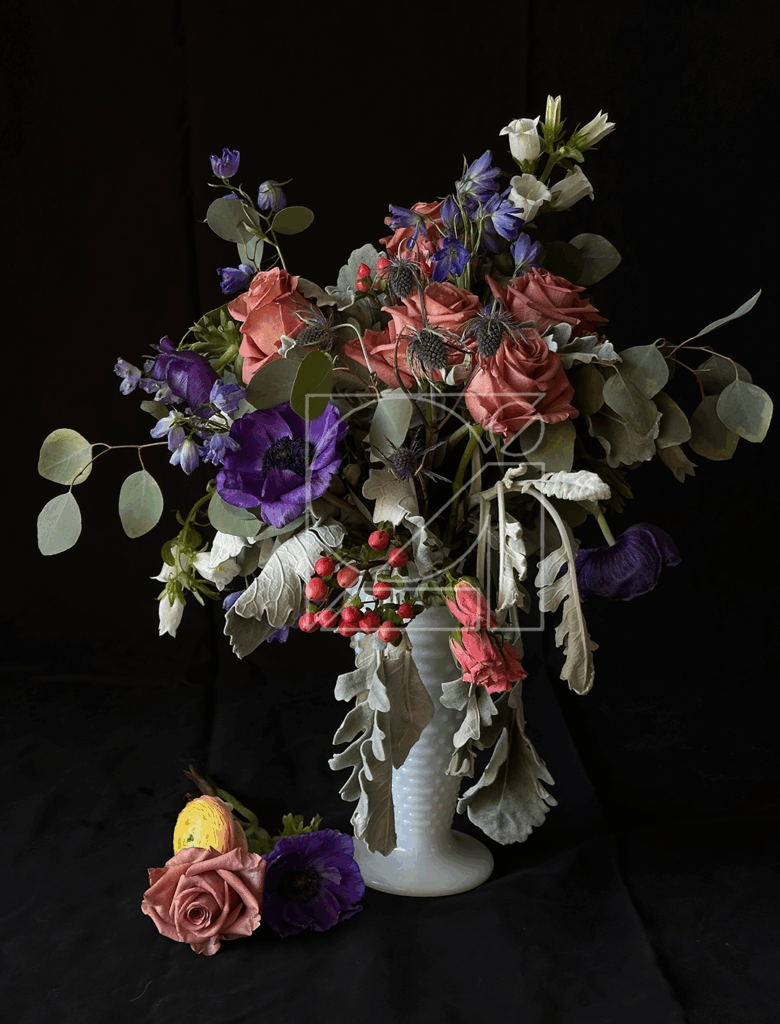
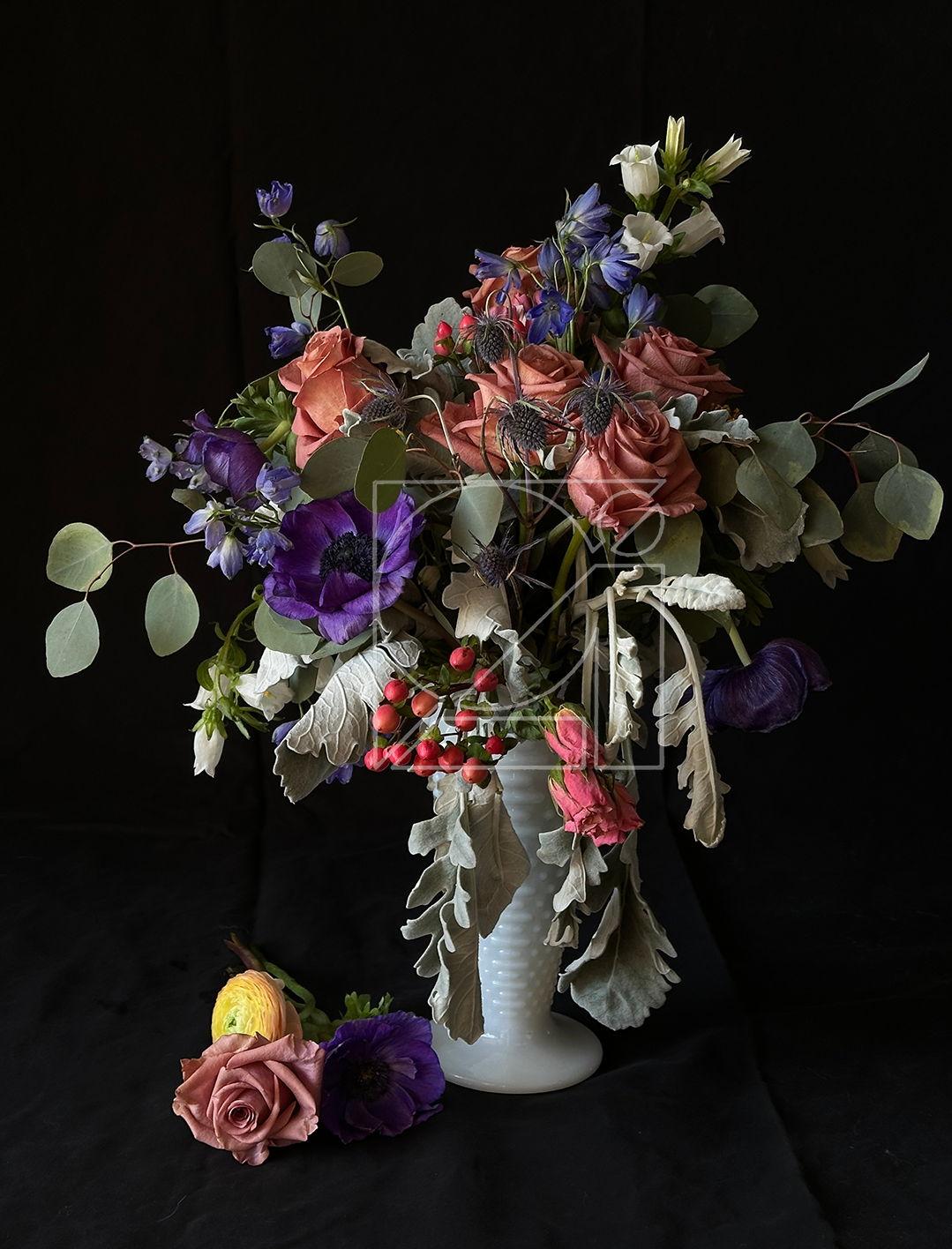
Shadows are just as important as light. Use a dark cloth (used in this photo), a black poster board, or even dark wall as your backdrop. This makes the flower glow against the darkness.
3. Reflect and Soften
A piece of white paper or a small reflector can bounce a bit of light back into the shadows, keeping them moody but not too harsh. In the photo below, I have a piece of white poster board to the right of the flowers to keep that side from getting too dark.
4. Embrace Imperfection
Wilted petals, a leaf curling at the edge, a wrinkle in the fabric — these imperfections add character and depth, just like in old master paintings.
When I create floral bouquet collections, I often lean on this dramatic style because it feels timeless and elegant.
If Renaissance-inspired florals speak to you, explore my collection of moody floral prints— perfect for adding a touch of old-world beauty to a modern space.